Source Electric Pickup for Urban Delivery, Farm Work, and Logistics
Compare 30 Electric Pickup models with varying power, speed, and battery options for urban delivery, farm work, and logistics. Buyers can review specifications like curb weight, drive type, and seating configurations to find the right vehicle.
Key considerations
Products List


Budget Friendly Taga EV Pickup Stable Pure Electric Load Capacity Engineering Operation
$34000.00 - $35000.00
MOQ: 1 set


Practical Electric Mini Pickup for Short Distance Delivery with Open Bed
$1600.00 - $1700.00
MOQ: 40 Pieces

China-Made Pure Electric Pickup New Electric Pickup Truck for Home Delivery
$2850.00 - $3190.00
MOQ: 1 pieces

Keyu New Arrivals Two Seats 45km/H Cheap Electric Pickup for Freight
$1370.00 - $1570.00
MOQ: 1 pieces


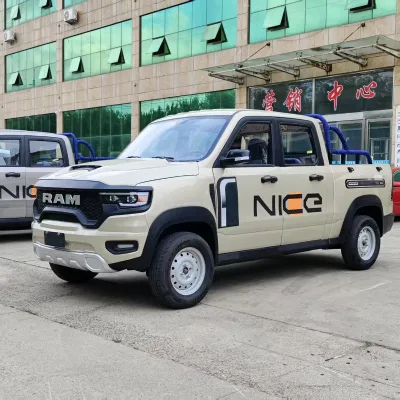
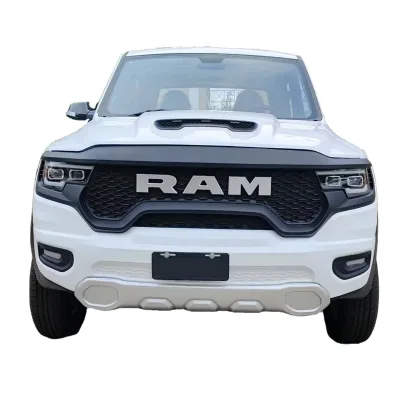
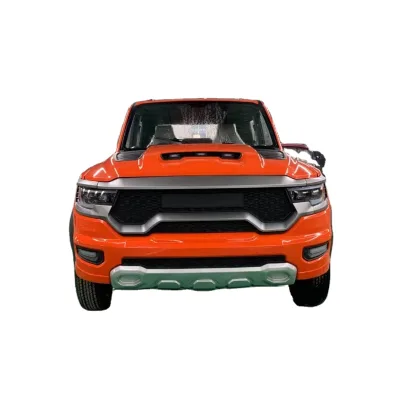
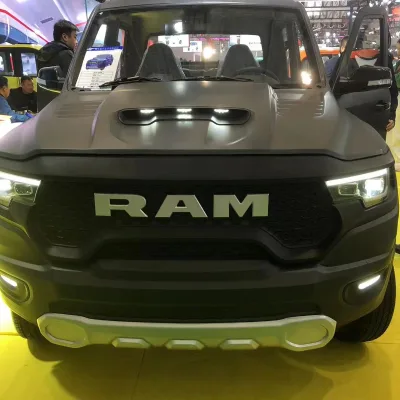
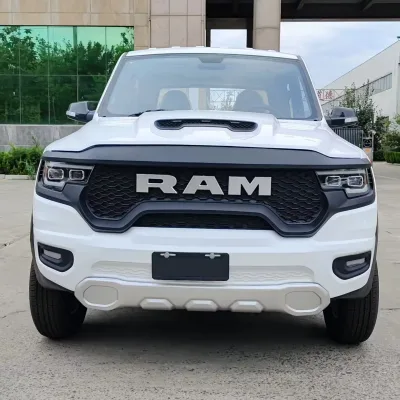
Hot 4*4 Two-row Electric Pickup 60V 3500W Containers Can Be Upgraded 2025
$4872.13 - $5582.65
MOQ: 10 units

Modern Electric Pickup with Enhanced Features for Cargo Transportation
$1380.00 - $1980.00
MOQ: 10 Sets





China Factory Double-Row 5-Seater Electric Pickup with Advanced Features
$28000.00 - $280000.00
MOQ: 1 Pieces


Electric Cargo Truck Cargo Pick up, Mini Pick up, Mini Car, Electric Pick up
$500.00 - $1380.00
MOQ: 1 Pieces
Comprehensive Sourcing Guide
Strategic Sourcing Guide for Electric Pickup Vehicles
Understanding the Electric Pickup Market Landscape
The global shift toward electrification has introduced a diverse array of Electric Pickup trucks tailored for commercial and utility applications. For procurement professionals, the market presents a spectrum of options ranging from high-performance models designed for speed and heavy payloads to specialized low-speed units intended for urban logistics. The core keyword "Electric Pickup" encompasses vehicles that utilize battery electric powertrains, eliminating the need for internal combustion engines and offering distinct operational advantages in terms of emissions and noise reduction.
Current market observations indicate a significant variance in vehicle configurations. Buyers must navigate a landscape where "Body Type" attributes vary between "Open" and "Closed" configurations, directly influencing the vehicle's suitability for specific cargo types. Furthermore, the "Fuel Type" is exclusively "Electric" across the observed inventory, confirming the absence of hybrid or alternative fuel options in this specific dataset. The "Condition" of available units is uniformly "New," suggesting that the primary procurement channel is for fresh inventory rather than refurbished or used equipment. This focus on new units implies that buyers should prioritize warranty terms and initial quality assurance protocols over long-term maintenance history.
Technical Specifications and Performance Metrics
When evaluating electric pickups, technical specifications serve as the primary filter for compatibility with operational requirements. The data reveals a wide range of performance capabilities. For instance, certain models, such as the "Huanghai Electric Pickup," list a "Max Speed" of 140 km/h, while other variants, like the "TAGA EV-3," are rated for 110 km/h. These figures are critical for buyers determining if the vehicle meets highway or local delivery speed requirements.
Powertrain characteristics are equally diverse. The "Max Power" ranges from 150 kW to 160 kW in observed models, with some entries noting a "Max Horsepower" of 218 PS. Torque figures, such as 325 N·m, are essential for understanding acceleration and load-carrying capacity. The "Drive" configuration is predominantly "RWD" (Rear-Wheel Drive) in specific heavy-duty listings, though "FWD" (Front-Wheel Drive) options exist for lighter applications. Buyers must verify the "Gearbox" type, with "Automatic" transmissions being a common feature, and confirm the "Motor Specification," which can range from 3500 W AC Motors to higher output units.
Physical dimensions and weight are vital for logistics planning. The "Curb Weight" varies between 2100 kg and 2180 kg in the observed data, influencing payload calculations. Exterior dimensions also differ; one model lists a standard of 5581×1840×1860 mm, while another specifies 5382 × 1885 × 1825 mm. The "Wheelbase" of 3096 mm in specific models suggests a focus on stability and cargo space. Additionally, the "Chassis System" often features "Hydraulic Shock Absorbing Suspension," which is a key indicator of ride quality and durability on varied terrain.
Compliance, Certification, and Safety Standards
Navigating the regulatory landscape is a critical component of sourcing electric vehicles. While specific certification statuses vary by manufacturer, buyers must rigorously verify compliance with local and international standards. The provided data mentions "ISOSeats:Steering:Left" as a certification attribute, indicating that seating and steering configurations are subject to specific safety standards. However, buyers should not assume universal compliance without direct verification from the supplier.
Safety features are a non-negotiable aspect of modern procurement. The "Seat Belt" is consistently listed as a "Three-Point Seat Belt," a fundamental requirement for occupant protection. The "Braking System" is noted as "Electromagnetic" in some listings, a technology that may offer specific advantages in regenerative braking but requires specific maintenance expertise. Buyers must also check the "prod_standard" values, which often relate to dimensional or construction norms, such as the 5581×1840×1860 mm specification.
It is imperative to distinguish between observed attributes and universal claims. For example, while "Mgnt Certification" is listed, the specific scope and validity period must be confirmed. Similarly, "Customization" is marked as "Available" for certain models, but this does not guarantee that all customization options meet regulatory safety standards. Buyers should request third-party test reports and certification documents that align with the destination country's vehicle safety regulations before finalizing any purchase.
Cost Drivers and Procurement Economics
The financial structure of Electric Pickup procurement is influenced by several dynamic factors. The observed "listed price range" spans from 500 USD to 280,000 USD, a vast disparity that reflects differences in vehicle class, battery capacity, and intended application. This range suggests that the market includes everything from basic utility vehicles to high-end commercial trucks. Buyers must carefully align their budget with the specific "Max Power" and "Battery Options" required for their operations.
The "Battery Options" are a primary cost driver, with configurations ranging from 60V 70Ah to 200Ah Lithium batteries. The choice of battery capacity directly impacts the vehicle's range and upfront cost. Additionally, the "prod_packing" method, whether "Naked" or "Carton," can affect shipping costs and insurance premiums. The "MOQ" (Minimum Order Quantity) ranges from 1 to 40 units, offering flexibility for small-scale buyers while potentially unlocking volume discounts for larger fleets.
Other cost considerations include the "Paint Finish," such as "Metallic Multi-Color Baked Paint," which may add to the unit price but offer superior durability. The "Tire Type," listed as "205 Tubeless Tires," also contributes to the total cost of ownership, as replacement frequency and availability vary by region. Buyers should conduct a total cost of ownership (TCO) analysis that includes energy consumption, maintenance, and potential downtime, rather than focusing solely on the initial purchase price.
Supplier Evaluation and Origin Verification
Identifying a reliable supplier requires a thorough vetting process that goes beyond the product listing. The "prod_origin" field indicates that vehicles may originate from regions such as "Shanxi" or generally "China." While these locations are known manufacturing hubs, buyers must verify the specific factory capabilities and reputation. The "Configuration Options" and "Color Options" listed as "Multiple" suggest a level of flexibility, but buyers should confirm the supplier's ability to deliver consistent quality across different configurations.
Supplier evaluation should also focus on the "Process" attributes, such as the "Paint Finish" application. A "Metallic Multi-Color Baked Paint" process implies a specific manufacturing capability that should be validated through factory audits. The "Customization" availability is a strong indicator of a supplier's adaptability, but it requires clear communication regarding lead times and additional costs.
Buyers must be cautious of generic claims. For instance, the term "Budget Friendly" is an attribute of a specific model but should not be assumed to apply to the entire category. Similarly, "Stable" in a model name is an observation, not a guarantee of performance. A robust supplier evaluation involves checking the "Mgnt Certification" status, verifying the "ISO" compliance, and assessing the supplier's track record in delivering vehicles that meet the specified "prod_standard" dimensions and performance metrics.
Quality Control and Long-Term Procurement Considerations
Ensuring quality in Electric Pickup procurement requires a multi-layered approach. The "Chassis System" and "Braking System" are critical areas for inspection. Buyers should verify that the "Hydraulic Shock Absorbing Suspension Chassis" meets the required load-bearing specifications and that the "Electromagnetic" braking system is calibrated correctly. The "Tire Type" should be inspected for compatibility with the intended terrain and load conditions.
Long-term procurement considerations extend beyond the initial delivery. The "Battery Options" require a clear understanding of the warranty and replacement cycle. Lithium batteries, while efficient, have a finite lifespan, and buyers should negotiate terms that cover degradation over time. The "Configuration Options" and "Color Options" should be standardized where possible to simplify maintenance and parts inventory.
Furthermore, the "prod_packing" method, whether "Naked" or "Carton," impacts the risk of damage during transit. Buyers should establish clear protocols for inspection upon arrival, focusing on the "Body Type" integrity and the "Exterior Color" finish. The "Seat Belt" and other safety features must be tested to ensure they function correctly after shipping.
Application Scenarios and Operational Fit
The diverse specifications of electric pickups allow for a wide range of applications. High-speed models with a "Max Speed" of 140 km/h and "Max Power" of 150-160 kW are suitable for inter-city delivery or light commercial transport where speed is a priority. Conversely, low-speed models with a "Max Speed" of 110 km/h and smaller battery capacities are ideal for urban delivery, campus shuttles, or short-distance logistics.
The "Body Type" distinction between "Open" and "Closed" is crucial for application matching. "Open" body types are typically used for transporting goods that do not require weather protection, while "Closed" types are necessary for sensitive cargo or passenger transport. The "Drive" configuration, whether "RWD" or "FWD," should be selected based on the terrain and load requirements. For example, "RWD" may be preferred for heavy loads, while "FWD" might be better for urban maneuverability.
The "Wheelbase" of 3096 mm and overall dimensions provide insight into the cargo capacity. Buyers should match these specifications to their specific operational needs, ensuring that the vehicle can accommodate the required volume and weight. The "Motor Specification" and "Battery Options" should be aligned with the daily mileage and charging infrastructure available at the buyer's facilities.
Final Procurement Recommendations
Sourcing electric pickups requires a disciplined approach that balances technical specifications, cost, and compliance. Buyers should start by defining their operational requirements, including speed, payload, and range. They must then evaluate suppliers based on their ability to meet these requirements while adhering to safety and quality standards. The wide price range and diverse configurations offer flexibility, but they also demand careful due diligence.
Key recommendations include verifying all "prod_standard" dimensions and "Mgnt Certification" details, conducting factory audits to assess manufacturing capabilities, and establishing clear quality control protocols for the "Chassis System" and "Battery Options." By focusing on these critical areas, buyers can mitigate risks and ensure that their Electric Pickup fleet delivers the expected performance and value. The market offers robust options for various applications, provided that procurement strategies are grounded in verified data and rigorous supplier evaluation.
FAQs
What are the maximum speed options for electric pickups?
Maximum speeds vary by model, with observed options reaching 140 km/h or 110 km/h. Buyers must verify the specific model requirements, as performance depends on the selected motor power and intended application, such as highway or urban delivery.
Which drive configurations are available for these vehicles?
Available drive configurations include Rear-Wheel Drive and Front-Wheel Drive. The selection depends on the payload needs and terrain, with RWD often preferred for heavy loads and FWD suitable for lighter urban maneuverability.
Can buyers customize the battery capacity for these pickups?
Yes, customization is available with battery options ranging from 60V 70Ah to 200Ah Lithium. Buyers should confirm specific capacity needs against the supplier's configuration options to ensure the vehicle meets their required range and operational duration.
What is the typical minimum order quantity for these units?
The minimum order quantity ranges from 1 to 40 units depending on the supplier and model. Small-scale buyers can order single units, while larger fleets may need to meet higher thresholds to unlock volume discounts or specific configurations.
How do body types differ between open and closed models?
Body types are observed as either Open or Closed configurations. Open bodies are suitable for cargo requiring no weather protection, while closed bodies are necessary for sensitive goods or passenger transport, directly influencing the vehicle's utility.
What certifications should buyers verify for these electric pickups?
Buyers should verify certifications such as ISO standards and specific management certifications like Mgnt Certification. It is critical to request third-party test reports to ensure compliance with destination country safety regulations before finalizing any purchase.